
Earlier this week I was frankly quite shocked when I realized that the beef that often graces our dinner table may have traveled to more countries than I have! And I've been to a few!
My "beef" in the past with conventionally-raised beef (and other meat for that matter) has been how it was raised i.e. where it lived, how it was treated, what it was fed, how it was slaughtered and so forth.
Now I wonder what the conditions were in those other countries where that steer might have been born or fattened up before it landed in America.
Actually, can the conditions overseas be any worse than these?
I grew up on a farm. Our farm animals were our pets. They all had names. I still remember Daisy, Eloise, Elaine, Anabelle, Honey--just to name a few.
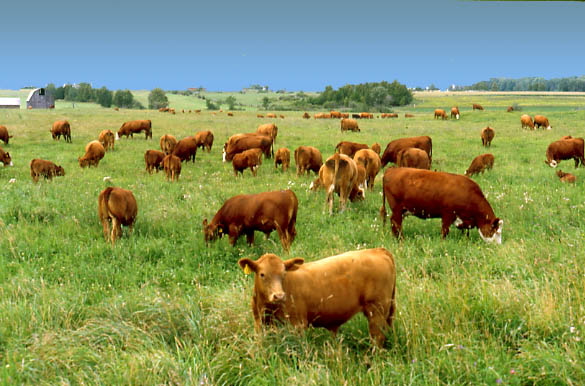
We had a large pasture for our cattle to graze in with plenty of room to move around. Factory farms have unnaturally large numbers of animals jammed together in close quarters. Feedlots often contain thousands of animals standing in dirt and manure-covered areas.
It was fascinating looking at this large factory farm map of our whole country. The explanations of what it all means is quite telling. Interestingly, the map does not show the exact amount of animals on each farm. That information is not for the public eye!
Now back to our farm. Our farm animals had daily access to the outdoors which meant plenty of sunshine and fresh air, or if they were inside, there were several windows and lights in the barn. Factory farm animals are often confined indoors with little or no exposure to fresh air, let alone sunlight. This can create all kinds of problems for them.
Our farm animals as far as I can remember were born with all of their "body parts" and lived with all of their "body parts". Later on when we started raising feeder hogs, though, I remember Dad neutering the males, and cutting off their tails. I always cried when I heard their screams of pain, and I would hold them trying to comfort them. I hated those days!
But that mutilation is just par for the course on these factory farms. Our poor animals had to be prepared ahead of time to fit into those types of conditions. I'm glad I didn't know then what I do now!
I'm sure that we must have used antibiotics now and then for treating mastitis and other issues, but the factory farms use them routinely.
This was a report back in 1999. What would the figures be today?
And yet the pain and suffering doesn't end there either. Moving on into the slaughterhouses is another whole issue!
Michael Pollan, a news journalist, wrote the following article about the whole process, "This Steer's Life, The Highly Unnatural Journey of No. 534, From Calf To Steak." If you're an animal lover like me, you'll want to have a tissue handy!
You know I totally understand the outrage expressed towards Michael Vick over his horrendous treatment of all those dogs involved in the dogfighting ring! It was shameful!
But when I hear about the inhumane and unethical treatment of all these other animals, I'm stunned that there is so little outrage over the thousands upon thousands of animals that live and die horrendously each day! Aren't they just as important?
Besides with all the stress, antiobiotics, diseases and abnormalities inflicted upon these animals from birth to death, do I really want to eat this meat or feed it to my loved ones?
It doesn't take a lot of thought to figure out the answer to that question!




No comments:
Post a Comment